

Have you ever starting prayer of yoga finished a yoga session and still felt restless inside? Many people start searching for yoga prayer because something feels incomplete like the body moved, but the heart didn’t fully connect. Maybe you’re looking for calm, clarity, or a deeper sense of peace beyond poses and breathing. That quiet need for meaning is real, and you’re not alone in feeling it.
A simple yoga prayer can turn your routine into something more powerful and personal. It helps you prayer yoga slow down, focus your mind, and bring intention into every movement. Instead of just following steps, you begin to feel present, grounded, and connected. Whether you’re a beginner or experienced, adding opening prayer for yoga to your practice can bring a sense of inner peace yoga prayer that stays with you long after your session ends.
What Is Yoga Meaning, Purpose & Spiritual Power
You might have started importance of prayer in yoga thinking it’s just stretching or exercise but after a few sessions, you realize there’s something deeper going on. Maybe it’s the calm you feel after breathing slowly, or the way your mind finally quiets down. That curiosity What is yoga really is often the first step toward discovering its true power beyond the physical poses.
Yoga is more than movement; it’s a practice that connects your body, mind, and spirit. When you combine yoga with yoga prayers and meditation, it becomes a meaningful routine that brings balance, peace, and clarity into your daily life importance of prayer in yoga. Instead of rushing through poses, you begin to move with purpose and awareness.
In simple terms yoga means union It’s about bringing everything within you into harmony with your thoughts, emotions, and physical body Physically, yoga prayers improves flexibility, strength, yoga prayer and posture. Spiritually, it helps you prayer of yoga become more mindful, present, and connected to something greater than yourself.
The connection between yoga prayer and meditation is what makes this practice truly powerful. Yoga prepares your body prayer of yoga meditation calms your mind, and prayer opens your heart. Together, they create a complete experience that supports inner peace and emotional well-being.
That’s why yoga is not just exercise it’s a mind-body-soul practice. It teaches you how to slow down, breathe deeply, and live with intention. Over time, this simple practice can transform not only how your body feels, but how you think, respond, and experience life.
International Yoga Day 2025: Embracing Wellness, Balance, and Mindful Living
Every year international yoga day 2025 inspires millions of people around the world to reconnect with their physical health, mental well-being, and inner peace. More than just a fitness practice, yoga promotes balance between the mind and body while encouraging a healthier lifestyle. This global celebration highlights the lasting benefits of international yoga day motivating people of all ages to embrace mindfulness, reduce stress, and improve overall wellness through the transformative power of yoga.
Also Read: 40 Powerful Right Ear Ringing Meanings & Spiritual Signs 2026
What Is a Yoga Prayer Deep Spiritual Insight
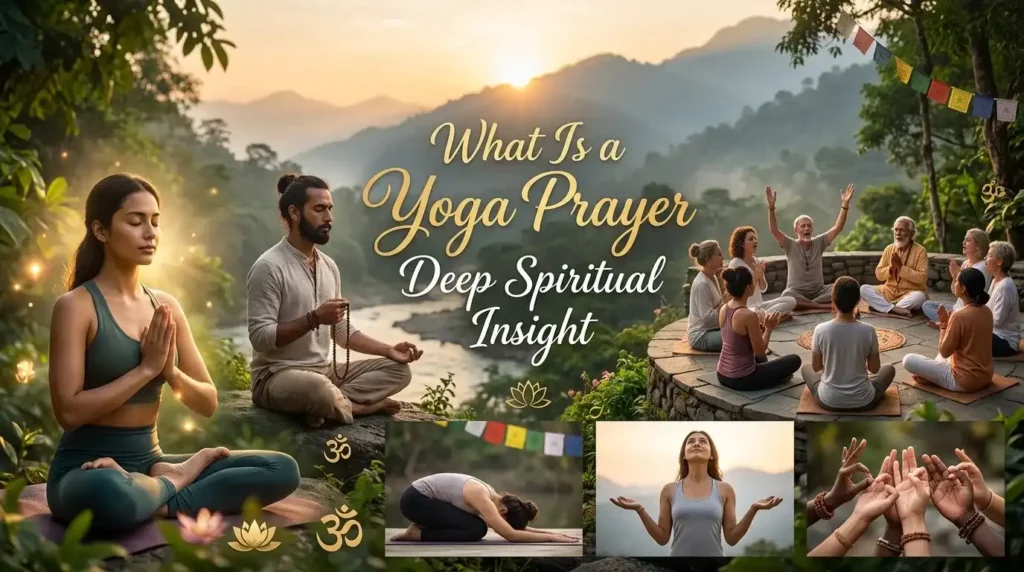
Have you ever paused in the yoga day prayer middle of a yoga session and felt the need to connect on a deeper level? Not just stretch your body but calm your thoughts or speak something meaningful from your heart That feeling is often what leads people to discover yoga prayer. It’s not about religion or strict rules it’s about adding intention and emotion to your practice.
A yoga prayer is simply a short, heartfelt expression you say silently or out loud during your practice. It can be words prayer yoga of gratitude, a request for peace, or a reminder to stay present. In simple terms, it’s your way of turning yoga into a personal and spiritual experience instead of just a physical routine.
Many people get confused betweenoraciones con la palabra yoga mantra, chanting, and prayer, but they each have a slightly different role:
- A mantra is a word or phrase you repeat to focus your mind (like “Om” or “I am calm”)
- Chanting is the rhythmic repetition of those mantras, often aloud
- A prayer is more personal it comes from your heart and expresses intention, gratitude, or guidance
The role of yoga mantra and yoga chanting is to steady your mind and create a calming rhythm. When your thoughts slow down, it becomes easier to stay present in each movement. This is why many yoga sessions include chanting—it helps shift your focus from distractions to awareness.
Adding yoga prayers to your yoga practice enhances it in a powerful way. It brings emotional depth, strengthens your inner connection, and helps you feel more grounded. Instead of just moving through poses, you begin to move with meaning. Over time, this simple addition can transform your practice into a peaceful, mindful, and deeply fulfilling experience.
What Is Yoga in Hinduism
Many people search for what is yoga in Hinduism because they want to understand whether yoga is only physical exercise or something much deeper. While modern yoga is often connected with stretching and fitness, Hinduism views yoga as a spiritual path that helps a person develop inner peace, self-control, and a closer connection with the divine. This deeper meaning is what makes many readers curious about yoga’s true origin and purpose.
In Hinduism, yoga is an ancient spiritual practice focused on uniting the mind, body, and soul with higher consciousness. The word “yoga” comes from the Sanskrit root yuj, meaning “to unite” or “to join.” Traditional Hindu yoga includes meditation, breathing practices, moral discipline, devotion, and self-awareness to help individuals grow spiritually and live with balance, wisdom, and inner harmony.
Morning Yoga Prayer Routine Daily Practice Plan
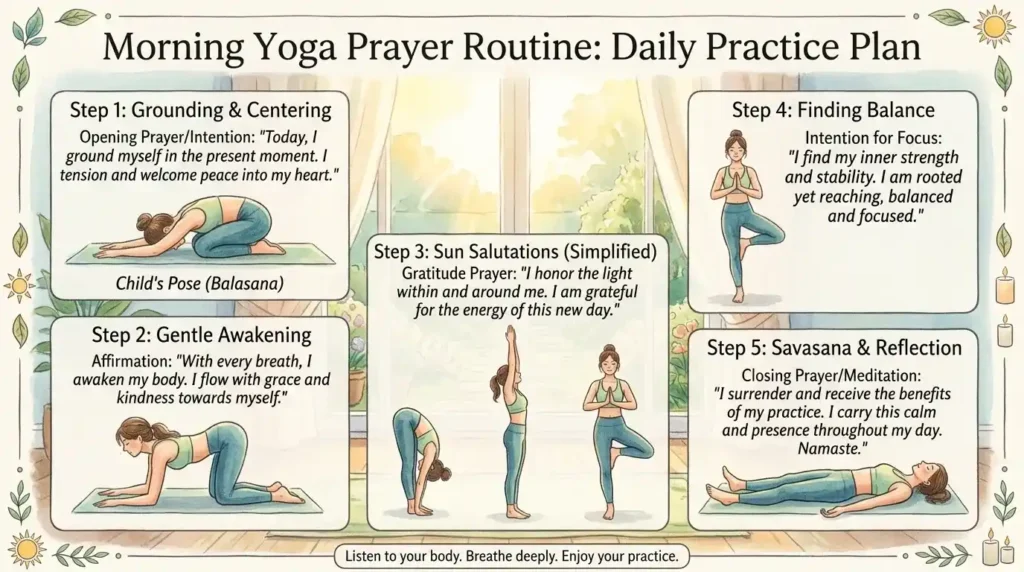
Waking up morning yoga prayer with a heavy mind or starting prayer of yoga scattered thoughts can make your whole day feel off. Many people try yoga in the morning yoga prayer routine morning yoga stretches prayer for yoga but still feel rushed or distracted because there’s no clear structure or intention. That’s where a morning yoga makes a real difference; it gives your yoga day prayer a calm, morning prayer yoga for beginners focused start instead of chaos.
This 30–45 minute daily yoga prayer plan Mon–Fri is simple, practical, yoga prayer mantra and inspired by a proven flow: opening psalms, sun salutations, prayer for quiet confidence, meditation, and closing prayer. It helps you move from stress to stillness, step by step yoga prayer in english. Even if you’re a beginner, 10 minute morning yoga this routine will guide you yoga and prayer toward clarity, balance, and inner peace before your day even begins.
Step-by-Step Morning Yoga Prayer Routine 30–45 Minutes
starting prayer of yoga your morning yoga with adriene with the right sequence can completely change your energy. This prayer of yoga routine is designed to be easy to follow, deeply calming, and spiritually grounding. Each prayer for yoga step connects naturally with the next, so your body, breath, 15 minute morning yoga and mind stay aligned throughout the practice.
Daily Routine Mon–Fri Yoga Prayer Plan
| Step | Practice | Time | What to Do | Purpose / Benefit |
| 1 | Opening Psalms | 3–5 min | Sit quietly, close your eyes, and read or say a short psalm-style prayer slowly | Calms the mind, sets intention, creates spiritual focus |
| 2 | Sun Salutations (Surya Namaskar) | 10–15 min | Perform gentle yoga flow with slow breathing and awareness | Warms the body, builds energy, connects breath with movement |
| 3 | Prayer for Quiet Confidence | 3–5 min | Pause, place hands on heart, and repeat a calming confidence prayer | Builds inner strength, reduces self-doubt, creates emotional balance |
| 4 | Meditation (Breath + Chanting) | 8–10 min | Sit still, focus on breath, repeat a simple mantra like “peace within me” | Improves focus, reduces stress, deepens mindfulness |
| 5 | Closing Prayer | 3–5 min | End with gratitude, reflect on your practice, and relax your body | Brings calm closure, carries peace into your day |
Mon–Fri Focus Plan For Better Results
| Day | Focus Theme | Goal |
| Monday | Calm & Reset | Start the week with mental clarity and relaxation |
| Tuesday | Strength & Balance | Build physical and emotional stability |
| Wednesday | Midweek Awareness | Refocus your mind and release stress |
| Thursday | Deep Connection | Strengthen meditation and inner awareness |
| Friday | Gratitude & Release | Let go of stress and end the week peacefully |
Simple Tips to Make This Routine Work
- Keep your phone away during practice
- Focus on slow breathing, not speed
- Don’t rush quality matters more than time
- Stay consistent, even if you shorten the routine
By following this morning yoga prayer and morning yoga routine, you create a peaceful foundation for your entire international yoga day. Instead of reacting to stress, you start your day with clarity, calmness, and control making everything that morning yoga flow feel more balanced and manageable.
Brett Larkin Morning Yoga: Calm Start for Mind & Body
Ever wake up feeling tired, distracted, or not fully ready to face the day That’s exactly where a brett larkin morning yoga routine can make a difference. Known for her calm guidance and mindful flow, her morning yoga style helps you gently wake up your body, clear your mind, and set a peaceful tone for the day. It’s simple, beginner-friendly, and perfect for building focus, balance, and positive energy right from the start.
7 Powerful Benefits of Yoga Prayer Why It Matters
Sometimes, you finish a yoga session and feel physically better but mentally, something still feels unsettled. That’s where yoga prayer makes a real difference. It fills the gap between movement and meaning, helping you slow down, reflect, and truly connect with yourself on a deeper level.
When you add importance of prayer in yoga to your practice, yoga becomes more than yoga and prayer just poses; it turns into a calming, grounding experience that stays with you throughout the day. Over time prayer for yoga these small moments of intention can create powerful changes in how you think, feel, and respond to life.
1. Builds Inner Peace and Clarity Yoga prayer helps quiet the noise in your mind. As you focus on simple, meaningful words, your thoughts slow down, making space for clarity and calm.
2. Strengthens Spiritual Connection Whether you believe in God, higher energy, or inner self, prayer creates a deeper connection. It allows you to feel guided, supported, and more aligned with your purpose.
3. Improves Focus in Meditation Many people struggle to stay focused during meditation. Adding a prayer or mantra gives your mind something steady to return to, making it easier to stay present.
4. Reduces Stress and Anxiety When you combine breath, movement, and prayer, your body naturally relaxes. This reduces stress levels and helps you feel more balanced emotionally.
5. Creates Quiet Confidence One of the most overlooked benefits is the sense of quiet confidence. Through consistent practice, you begin to trust yourself more, beyond yoga feel calmer in challenges, and respond with patience instead of fear.
6. Enhances Mindfulness in Daily Life Yoga prayer teaches you to stay aware not just during practice, but throughout your day. You become more present in conversations, decisions, and even small moments.
7. Deepens Teacher–Student Connection In group yoga settings, shared prayers or intentions create a sense of unity. It builds trust, respect, and a deeper bond between teacher and students.
Nithyananda Yoga — Understanding Its Spiritual and Meditation Practices
Many people searching for nithyananda yoga are looking for spiritual practices that promise inner peace, meditation, self-awareness, and emotional healing. In today’s stressful world, many individuals turn toward yoga and mindfulness teachings to feel calmer, more focused, and spiritually connected. This curiosity often leads readers to explore different yoga traditions and meditation systems connected with spiritual teachers and modern yoga movements.
Nithyananda yoga is commonly associated with meditation practices, breathing techniques, mindfulness exercises, and spiritual teachings focused on self-discovery and consciousness. The approach emphasizes inner awakening, relaxation, energy balance, and mental clarity through regular spiritual discipline. Many followers are drawn to these teachings because they seek personal transformation, emotional peace, and a stronger connection between the mind, body, and spirit.
Powerful Yoga Prayers & Mantras With Meaning
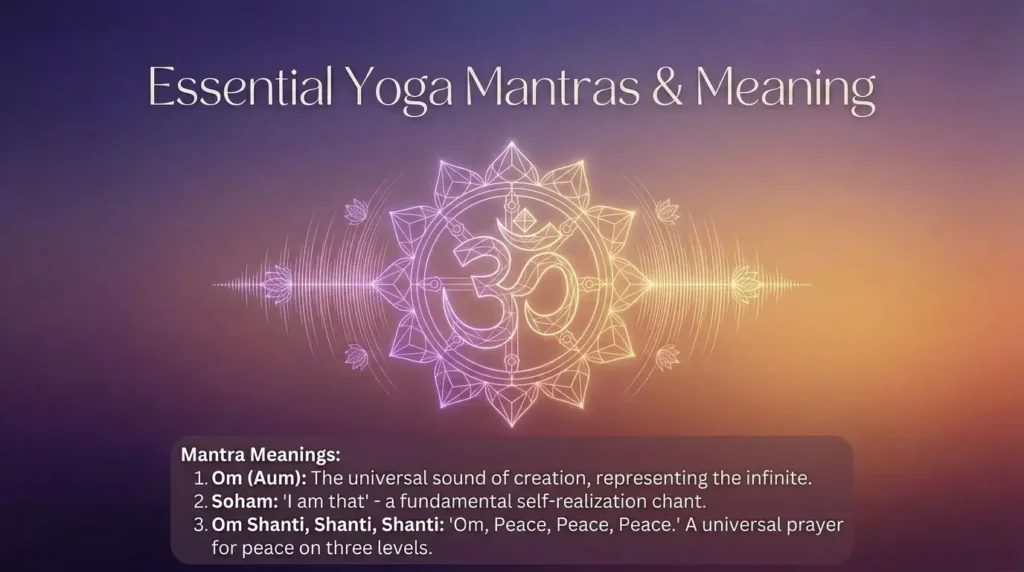
If you’ve ever felt like yoga is more than just movement but still couldn’t express that feeling in words, this section is for you. These yoga prayers and mantras with meaning are designed to bring meaning, calmness, and intention into your practice. Each prayer is simple yet deeply reflective, helping you shift from a physical routine into a mindful spiritual experience. Whether you are starting your journey yoga prayer mantra or deepening your practice, these prayers guide you toward inner peace, emotional balance, and a stronger connection with yourself through breath, awareness, and gratitude.
Opening Yoga Prayers Start Your Practice Right
Starting yoga prayer in english with intention changes everything. These opening prayers help you move from distraction to presence, gently calming your thoughts before yoga exercises practice begins. Inspired by Psalms-style reflection, christian tone, and universal spiritual language, they are simple enough for anyone to connect with, regardless of background. This section includes opening psalms from a reflective tradition and the powerful prayer for quiet confidence, helping you feel steady, safe, and emotionally grounded. Each prayer is designed to prepare your heart and mind so your yoga practice begins with peace, focus, and inner clarity.
Opening Yoga Prayers Numbered & Meaningful
1. Lord, I come to this moment with a calm heart, asking You to quiet my thoughts and help me be fully present in my practice today.
2. May this yoga practice bring peace to my mind, healing to my body, and light to my spirit as I begin with gratitude.
3. I release all tension, stress, and worry, and I allow my breath to guide me into stillness and peace.
4. God, guide my movements today so that each breath becomes steady, peaceful, and full of awareness.
5. May I be present in this moment, letting go of yesterday’s burdens and tomorrow’s fears.
6. I open my heart to peace, strength, and clarity, trusting that this practice will bring balance within me.
7. Let my body move gently, my mind stay calm, and my spirit remain open to healing energy.
8. I am safe in this moment, I am grounded in my breath, and I am ready to receive peace.
9. May this practice help me slow down, listen inward, and reconnect with my true self.
10. I enter this space with gratitude, humility, and a willingness to grow in peace and awareness.
Opening Psalms Competitor-Inspired Spiritual Reflection
“Be still within me, O Lord, and calm every restless thought.
Let my breath become steady like a quiet river,
and let my heart rest in peace that does not shake.
In this sacred moment, I am held, I am guided, I am enough.”
Prayer for Quiet Confidence
“May quiet confidence rise within me today not loud, not forced, but steady like deep water.
When doubt enters my mind, remind me to breathe slowly and trust the process.
When fear tries to pull me away from peace, help me return to my center.
Let my movements be gentle but strong, my thoughts be calm but clear, and my heart remain steady in all situations.
I do not need to rush or prove anything in this moment.
I am guided, I am supported, and I am enough just as I am.”
Surya Namaskar Prayer Sun Salutation Mantras
When you begin Surya Namaskar, it often feels like just a physical flow of movements, but many people still feel something deeper is missing—like the practice has motion but not meaning. This is where Surya Namaskar Prayer (Sun Salutation Mantras) brings real transformation. It helps you connect breath with intention, movement with gratitude, and energy with awareness so your yoga practice feels complete, not just physical. These prayers guide your mind into a peaceful rhythm where every stretch becomes an expression of respect for life, light, and inner strength.
In this section, you will explore the surya namaskar prayer meaning, the deeper spiritual meaning of sun salutations, and how each movement reflects gratitude toward the sun as a source of energy and life. You will also feel the gentle flow of a yoga prayer song tone, where words and breath move together like a calming rhythm. These yoga prayer hands are designed to help you slow down, stay present, and turn your sun salutation practice into a mindful, spiritual experience that brings balance, warmth, and inner clarity.
11. O radiant source of light, as I rise with this breath, I honor the energy that awakens life within and around me.May each movement I make reflect gratitude for this new day, and may my heart open like the morning sky, calm and full of hope.
Guide my steps with warmth, and let your light bring clarity to my thoughts and peace to my spirit.
12.With every stretch and every inhale, I welcome strength, renewal, and gentle energy into my body.As the sun rises steadily, may I also rise with purpose and balance, leaving behind heaviness and doubt.
Let my breath flow like a soft rhythm, connecting me to the natural harmony of life.
13.O light of life, shine within me as I move through each posture with awareness and grace.
May this practice remind me that even in darkness, there is always light waiting to rise again.
Help me stay present in this moment, feeling each breath as a quiet song of peace and renewal.
14.As I bow and rise in this flow, I offer gratitude for the strength in my body and the calm in my mind. May each movement become a gentle prayer, each breath a note in a peaceful rhythm that guides me inward. Let me move with patience, trust, and a heart open to stillness.
15.O source of warmth and life, fill me with steady energy and quiet joy as I complete this flow.
May I carry this light within me beyond my practice, sharing calmness, kindness, and balance wherever I go. Let this moment remind me that peace begins within, and I can return to it with every breath I take.
Yoga Mantras & Chanting Prayers
Sometimes your mind feels too busy to sit still, even during yoga. Thoughts keep coming, and it becomes hard to focus on your breath or stay present. That’s where yoga mantras and chanting prayers help. They give your mind a simple rhythm to follow, turning distraction into calm awareness. When you repeat meaningful words softly or silently, your breathing slows down, your body relaxes, and your attention gently returns to the present moment. This is how chanting connects deeply with meditation and helps you experience real inner peace.
In this section you will explore the traditional mantra of yoga, understand how yoga chanting supports meditation, and learn the deeper meaning of Namaste as a prayer of respect and connection. These prayers are written in a flowing, peaceful tone so they feel natural during practice. Each mantra becomes like a quiet inner voice guiding you toward stillness, helping you move beyond stress into a calm, centered state where your mind, breath, and spirit feel aligned.
16. Om I breathe in peace, and I breathe out all tension. With each gentle sound, I return to stillness, allowing my mind to settle like calm water.
17. I am calm, I am centered, I am at peace. Each breath brings me closer to balance, and each moment grounds me in quiet awareness.
18. Let my thoughts slow down, and my heart open gently. As I repeat these words, I release fear and welcome a deep sense of inner calm.
19. Om the sound of life flows through me. In this rhythm, I find connection, in this stillness, I find myself.
20. I trust this moment, I trust this breath.With every repetition, I let go of control and allow peace to guide me inward.
21. Namaste—the light within me honors the light within all. May I carry respect, kindness, and unity in every thought, word, and action.
22. My breath is steady, my mind is clear. As I chant softly, I create space within for peace, clarity, and quiet strength.
23. I release what I cannot control, and I focus only on this present moment. Each word I repeat brings me deeper into stillness.
24. Om Shanti… peace within me, peace around me. May calmness flow through every part of my being, and may I rest in this gentle silence.
25. I am present, I am aware, I am enough. Through this simple chant, I reconnect
with the calm and strength already within me.
Student–Teacher Yoga Prayers
In alo yoga learning is not just about yoga poses it’s about guidance, trust, and respect. Many people attend classes, follow instructions, and improve physically, but often miss the deeper connection that exists between a student and a teacher. This is where student teacher prayer yoga becomes meaningful. It reminds both the learner and the guide that yoga is a shared journey built on humility, patience, and understanding. When respect is expressed through prayer, the learning space becomes more peaceful, supportive, and spiritually grounded.
These prayers 26–30 are designed to honor that sacred bond. They reflect gratitude for guidance, openness to learning, and a willingness to grow with discipline and trust. Rooted in tradition, these prayers help build authority not through control, but through wisdom and compassion. Whether you are a student seeking clarity or a teacher offering guidance, these words create a deeper sense of connection, making your yoga practice more meaningful, respectful, and aligned with true yogic values.
26. With a humble heart, I enter this space ready to learn, grow, and listen. May I respect the guidance given to me and receive it with openness and patience. Let this learning journey be filled with understanding, kindness, and steady progress for both teacher and student.
27. I give thanks for the wisdom that is shared in this practice. May the teacher guide with clarity and compassion, and may the student learn with focus, respect, and a willing heart. Together, may we grow in knowledge, peace, and mutual understanding.
28. May this space remain safe, supportive, and free from judgment. Let the teacher’s words bring clarity, and the student’s effort bring growth. May we honor each other’s journey, knowing that learning happens step by step with patience and trust.
29. I open my mind to guidance and my heart to learning. May I practice with discipline, listen with respect, and grow with humility. Let this connection between teacher and student be built on trust, kindness, and shared purpose.
30. May wisdom flow naturally in this space, from teacher to student and beyond. Let every instruction be given with care and received with gratitude. May this practice strengthen not only the body, but also the bond of respect, learning, and spiritual growth we share together.
Closing Yoga Prayers End Your Practice Peacefully
Ending your practice the right way matters just as much as how you begin. Many people finish yoga, roll up the mat, and rush back into daily life—missing the chance to carry that calm forward. A thoughtful yoga closing prayer helps you slow down, reflect, and gently seal the peace you’ve created. It turns your final moments into a bridge between practice and real life, so the calm mind you feel doesn’t fade as soon as you stand up.
These yoga ending prayers focus on gratitude, emotional release, and quiet reflection. They help you acknowledge your effort, appreciate your body, and center your thoughts before moving on. You’ll also find a meaningful New Zealand Lord’s prayer variation, offering a fresh and inclusive way to yoga prayer at end of class your session. Each yoga prayer beads is written in a calm, flowing tone so you can end your practice feeling grounded, peaceful, and ready to carry that stillness into the rest of your day.
31. Thank you for this moment of stillness and peace. As I end this practice, may I carry calmness within me, allowing it to guide my thoughts, my actions, and my day ahead.
32. I release all remaining tension from my body and mind. May I walk forward with lightness, clarity, and a heart full of gratitude for this practice.
33. As my breath returns to normal, may my mind remain calm and steady. Let this peace stay with me, even as I step back into the noise of daily life.
34. I honor the effort I gave today and the stillness I found within. May I treat myself with kindness and patience in all that I do.
35. May I carry this quiet energy into every conversation, every task, and every moment. Let peace guide me, and let gratitude shape my day.
36. I am thankful for this time of reflection and renewal. May I remain grounded, centered, and aware as I move forward.
37. With each breath, I let go of stress and welcome calm. May I rest in this peaceful state and return to it whenever I need.
38. May all beings find peace, comfort, and balance. As I close this practice, I send kindness outward and carry it within.
39. Let this practice remind me that peace is always within reach. May I return to this calm space whenever I feel overwhelmed or uncertain.
40. I end this practice with a grateful heart and a quiet mind. May I move forward with clarity, balance, and a deep sense of inner peace.
New Zealand Lord’s Prayer Yoga Closing Variation
Eternal Spirit, Earth-maker, Pain-bearer, Life-giver, Source of all that is and that shall be,
Father and Mother of us all, loving God, in whom is heaven. The hallowing of your name echoes through the universe. The way of your justice be followed by the peoples of the world. Your heavenly will be done by all created beings. Your commonwealth of peace and freedom sustain our hope and come on earth. With the bread we need for today, feed us. In the hurts we absorb from one another, forgive us. In times of temptation and test, strengthen us. From trials too great to endure, spare us. From the grip of all that is evil, free us. For you reign in the glory of the power that is love, now and forever. Amen.
Yoga Blessing: 20 Powerful Words for Peace & Energy
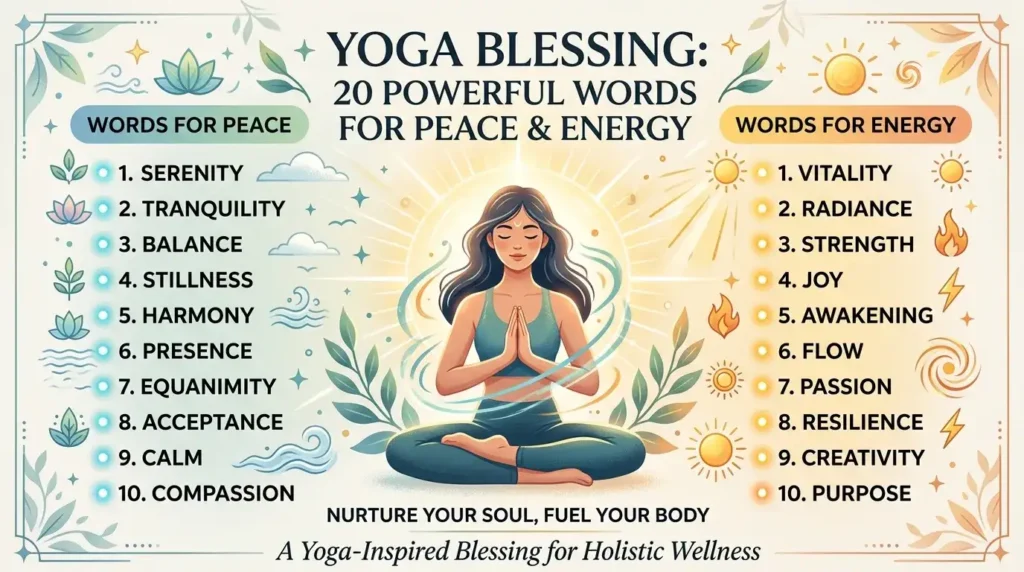
Some days you finish yoga and feel relaxed but something still feels incomplete, like your heart needs a moment of meaning, not just movement. That’s where a simple yoga blessing can change everything. It helps you pause, reflect, and carry peace beyond your mat into real life. Whether you’re practicing quietly at home or in a class, these blessings bring calm, clarity, and a deeper connection within.
In this section, you’ll find 20 powerful yoga blessings, including gentle Kundalini yoga blessings and meaningful yoga blessing quotes. Each one is written in simple, heartfelt words so you can use them daily before, during, or after your practice to feel grounded, focused, and spiritually refreshed.
Yoga Blessing
| # | Yoga Blessing | Type |
| 1 | May your breath be steady, your mind be calm, and your heart be open to peace today. | General |
| 2 | May every movement you make bring balance to your body and clarity to your thoughts. | General |
| 3 | May your inner energy rise gently, awakening strength, awareness, and light within you. | Kundalini |
| 4 | May you release all stress and welcome stillness with every breath you take. | General |
| 5 | “Peace begins the moment you choose to slow down and breathe.” | Quote |
| 6 | May your practice guide you toward patience, kindness, and self-understanding. | General |
| 7 | May your mind stay present and your body move with ease and grace. | General |
| 8 | May your spirit feel energized, your heart feel open, and your path feel clear. | Kundalini |
| 9 | May you find strength in stillness and comfort in your own presence. | General |
| 10 | “Within every breath lies the power to begin again.” | Quote |
| 11 | May your thoughts soften and your inner voice become gentle and supportive. | General |
| 12 | May your yoga practice bring healing, balance, and quiet confidence into your life. | General |
| 13 | May your energy flow freely, removing blocks and filling you with light. | Kundalini |
| 14 | May you carry peace with you beyond your practice and into your daily life. | General |
| 15 | “Calm mind, open heart, steady breath—that is true balance.” | Quote |
| 16 | May you trust your journey and move forward with courage and calmness. | General |
| 17 | May your breath guide you back to peace whenever life feels overwhelming. | General |
| 18 | May your awareness expand, bringing clarity and deep inner peace. | Kundalini |
| 19 | May gratitude fill your heart and light your path with positivity. | General |
| 20 | “The peace you seek is already within you just pause and feel it.” | Quote |
How to Use These Yoga Blessings
- Read one blessing daily after your yoga practice
- Repeat it slowly with your breath
- Reflect on its meaning for a few moments
These yoga blessings help you stay calm, focused, and spiritually connected throughout your day.
Kundalini Yoga — Awakening Inner Energy and Spiritual Awareness
Many people become curious about kundalini yoga when they feel mentally exhausted, emotionally disconnected, or spiritually stuck in the middle of busy daily life. You may have heard others describe it as a powerful practice for inner peace, healing, and self-discovery, yet still wonder what actually makes it different from regular yoga. That curiosity is completely natural because kundalini yoga is often surrounded by mystery, spiritual symbolism, and strong personal experiences.
At its core, kundalini yoga focuses on awakening inner energy through breathing techniques, meditation, movement, and mindfulness. Instead of only improving flexibility, this practice aims to strengthen the connection between the mind, body, and spirit. Many beginners are drawn to kundalini yoga because it encourages emotional balance, deeper awareness, and a calmer state of mind in a world that constantly feels overwhelming.
Birthday of Paramahansa Yogananda — Honoring His Spiritual Legacy
Many people search for the birthday of paramahansa yogananda because they feel inspired by his teachings on peace, meditation, and spiritual awakening. In a world filled with stress and distractions, his life continues to encourage people to slow down, reflect inwardly, and seek a deeper connection with God and the soul. His birthday is not only a date in history but also a reminder of the wisdom and calmness he shared with millions around the world.
Paramahansa Yogananda was born on January 5, 1893, in Gorakhpur, India, and became one of the most respected spiritual teachers of the modern era. His message of faith, mindfulness, and inner transformation still touches hearts today.
Prayer: “May God fill our hearts with peace, wisdom, and spiritual understanding just as Paramahansa Yogananda inspired countless souls to walk in faith, love, and inner light. Amen.”
Yoga Prayer in Practice Step-by-Step Guide
You might be thinking, “This all sounds meaningful, but how do I actually use a yoga prayer in real life?” That’s a common question. Many people understand the idea of prayer and meditation, but struggle to apply it during a busy routine. The good news is you don’t need long hours or perfect conditions. You just need a simple structure and a few mindful moments to turn your yoga into a peaceful, spiritual experience.
This step-by-step guide shows you when to say yoga prayer start, middle, end and how to naturally combine breath, meditation, and intention. It’s designed for beginners but works for anyone who wants a deeper, more focused practice. Even 20–40 minutes a day can help you feel calmer, clearer, and more connected.
Step 1: Start with an Opening Yoga Prayer (2–3 Minutes)
Begin your practice by sitting quietly or standing in a comfortable position.
- Close your eyes
- Bring your hands into prayer position (Anjali Mudra)
- Take slow, deep breaths
Example Prayer:
“Lord, as I begin this practice, calm my thoughts and guide my breath.
Help me stay present in this moment and open my heart to peace.”
👉 This step sets your intention and prepares your mind for focus.
Step 2: Move with Breath & Awareness (10–15 Minutes)
As you begin your yoga poses (like stretching or sun salutations), focus on your breathing.
- Inhale during expansion
- Exhale during release
- Stay aware of each movement
You can repeat a simple mantra silently:
“I am calm… I am present…”
👉 This connects movement + breath + awareness, making your practice more mindful.
Step 3: Add Prayer During Practice (Middle Connection – 3–5 Minutes)
Pause in between poses or during a gentle stretch.
- Place your hands on your heart
- Take 3–5 slow breaths
Mid-Practice Prayer:
“May I stay grounded in this moment.
Let my mind be clear and my heart be at peace.”
👉 This helps you reset your focus and deepen your connection.
Step 4: Meditation & Silent Reflection (8–10 Minutes)
After movement, sit or lie down comfortably.
- Close your eyes
- Focus on your breath
- Let thoughts pass without holding them
You can softly repeat:
“Peace within me… peace around me…”
👉 This step blends meditation and prayer, creating inner stillness.
Step 5: End with a Closing Yoga Prayer (3–5 Minutes)
Finish your session with gratitude and calm reflection.
Closing Prayer:
“Thank you for this moment of peace.
May I carry this calm into my day and share it with others.”
👉 This helps you transition from practice back into daily life without losing your calm.
Beginner Yoga Prayer Routine (Mon–Fri Plan)
Here’s a simple weekly structure inspired by a consistent routine:
Monday – Calm Start
- Focus: Relaxation + gentle opening prayer
Tuesday – Strength & Balance
- Focus: Breath control + short mantra
Wednesday – Midweek Reset
- Focus: Meditation + quiet reflection
Thursday – Deep Awareness
- Focus: Slow movement + mindful prayer
Friday – Gratitude & Release
- Focus: Closing prayer + emotional release
Simple Daily Flow (30–45 Minutes)
- Opening Prayer → 3 minutes
- Yoga Movement → 15 minutes
- Mid Prayer Pause → 5 minutes
- Meditation → 10 minutes
- Closing Prayer → 5 minutes
Key Tip for Best Results Don’t rush. Even a short, slow, intentional practice is more powerful than a long, distracted one. Over time, this routine will help you feel more peaceful, focused, and emotionally balanced.
Yoga Prayer Poses & Hand Positions Visual Guide
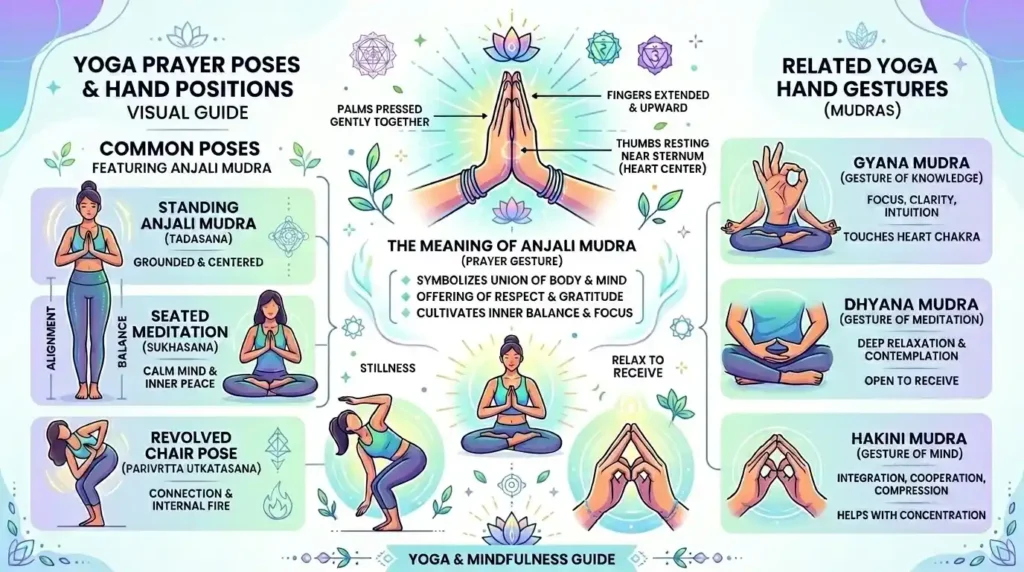
Have you ever noticed how simply bringing your hands together or standing still can instantly make you feel calmer? In oraciones con la palabra yoga posture is not just about the body it directly affects your mind and emotional state. Many people say prayers during yoga, but without the right posture, they miss a deeper level of focus and connection. The way you hold your body can either distract your mind or gently guide it into stillness.
This is why understanding yoga prayer poses and yoga prayer hands is so important. Simple gestures like yoga prayer hands (Anjali Mudra) or standing in a steady prayer pose yoga position can help you feel more grounded, balanced, and present. In this guide, you’ll learn the difference between common prayer poses, including the praying yoga pose vs praying mantis yoga pose, and how each one influences your focus, breathing, and spiritual awareness.
Yoga Prayer Hands Anjali Mudra
Anjali Mudra is one of the most common and powerful hand positions in yoga.
How to do it:
- Bring your palms together at the center of your chest
- Keep your fingers pointing upward
- Relax your shoulders and breathe slowly
Meaning:
This gesture symbolizes unity, balance, and respect. It brings your attention inward and helps you focus during prayer or meditation.
👉 Even a few seconds in this position can calm your thoughts and steady your breath.
Prayer Pose Yoga Standing or Seated
The prayer pose is often used at the beginning or end of a yoga session.
How to practice:
- Stand tall or sit comfortably
- Keep your spine straight
- Place your hands in Anjali Mudra
- Close your eyes and take slow breaths
Why it matters:
This pose helps you center your mind and prepare for prayer. It creates a feeling of calm control and emotional balance.
Niyoga Meaning — Understanding the Ancient Tradition of Niyoga
Many people searching for the niyoga meaning feel curious after hearing the term in ancient scriptures, cultural discussions, or historical teachings. Because the concept of niyoga is rarely explained in simple language today, it can seem confusing or misunderstood at first. That curiosity often leads readers to explore its historical and spiritual background to better understand its role in traditional society and religious texts.
In ancient Hindu tradition, niyoga referred to a custom where a widow or childless woman could conceive a child through a designated relative or chosen man for the continuation of family lineage. The practice was connected to social duty and family preservation rather than modern relationships.
Prayer: “May God grant us wisdom, understanding, and respect as we learn about ancient traditions and seek truth with an open and thoughtful heart. Amen.”
Yoga Peak Poses for Intermediate Practitioners — Strength, Balance & Flexibility
Many people searching for yoga peak poses for intermediate level are ready to move beyond basic stretches and explore postures that challenge strength, balance, and focus. At this stage, yoga becomes more than just flexibility it turns into a practice of control, awareness, and mind-body coordination. It is normal to feel both excited and slightly intimidated when progressing to these deeper poses, especially when trying to improve safely and steadily.
Intermediate peak poses are designed to build stability, increase flexibility, and develop core strength while preparing the body for advanced oraciones con la palabra yoga practice. These poses require patience, proper alignment, and mindful breathing. When practiced regularly, they help improve posture, reduce stress, and enhance overall physical and mental balance, making yoga a more complete and transformative experience.
1. Warrior III Pose Virabhadrasana III
Warrior III is a powerful balancing posture that strengthens the legs, core, and back while improving concentration. It teaches the body to stay steady even in challenging positions. Many intermediate practitioners find this pose rewarding because it builds both physical strength and mental focus at the same time.
2. Crow Pose Bakasana
Crow Pose is one of the most popular arm balance poses for intermediate yoga. It strengthens the wrists, arms, and abdominal muscles while improving confidence and body awareness. At first, it may feel challenging, but with practice, it becomes a symbol of control and balance.
3. Half Moon Pose Ardha Chandrasana
Half Moon Pose combines balance, flexibility, and strength in a single movement. It opens the hips, strengthens the legs, and improves coordination. This pose teaches stability while the body is partially lifted off the ground, making it an excellent intermediate challenge.
4. Bow Pose Dhanurasana
Bow Pose is a deep backbend that stretches the entire front body while strengthening the back muscles. It helps improve spinal flexibility and energy flow. Intermediate practitioners often use this pose to build flexibility for more advanced backbends.
5. Side Plank Pose (Vasisthasana)
Side Plank is a core-strengthening posture that improves balance, arm strength, and endurance. It also helps build stability in the shoulders and wrists. This pose is a great way to develop the strength needed for advanced yoga transitions.
6. Headstand Preparation Pose
This pose prepares the body for headstand by strengthening the neck, shoulders, and core. It is an important step for intermediate practitioners who want to safely progress into inversion poses. Proper guidance and slow progression are essential for safety.
Intermediate yoga peak poses are not just physical challenges they are steps toward deeper awareness and inner strength. With consistent practice, patience, and mindful breathing, these poses help transform yoga from simple movement into a powerful mind-body discipline.
Praying Yoga Pose vs Praying Mantis Yoga Pose
These two poses sound similar but are very different.
Praying Yoga Pose:
- Hands together at the heart
- Focused on stillness and inner peace
- Used for prayer, meditation, and grounding
Praying Mantis Yoga Pose:
- A more dynamic and physical pose
- Involves bending and body movement
- Focuses more on strength and flexibility
👉 If your goal is spiritual focus and calmness, the traditional prayer pose is more effective.
How Posture Affects Spiritual Focus
Your body and mind are deeply connected. The way you sit, stand, or hold your hands can change how you feel inside.
- A straight spine helps you stay alert and focused
- Relaxed shoulders reduce tension and stress
- Steady posture supports calm breathing
- Balanced alignment improves mental clarity
When your posture is stable, your mind naturally becomes quieter. This is why combining correct posture with yoga prayer creates a deeper, more meaningful experience.
Simple Tip for Better Practice
Next time you say a yoga prayer:
- Slow down your breath
- Bring your hands into prayer position
- Keep your posture steady and relaxed
You’ll notice an instant shift—from distraction to presence, from tension to peace.
By understanding these simple yoga prayer poses and hand positions, you can turn even a short moment into a powerful experience of calm, focus, and inner connection.
Yoga Prayer Tools & Symbols
Have you ever felt distracted while praying or chanting during yoga, like your mind keeps drifting away? That’s very common. Many people struggle to stay focused, especially when they’re new to combining prayer, breath, and meditation. This is where yoga prayer tools and symbols can make a real difference. They are not just traditional items they are simple, practical ways to help your mind stay present and your practice feel more meaningful.
When used with intention, tools like yoga prayer beads mala and spiritual symbols can gently guide your focus back to your breath and words. Instead of forcing concentration, they create a natural rhythm that supports calmness and awareness. Over time, these tools become part of your routine, helping you feel more connected, grounded, and spiritually aligned during your yoga practice.
Yoga Prayer Beads Mala Meaning
A mala is a string of yoga prayer beads traditionally used in prayer and meditation. Most malas have 108 beads, each representing a repetition of a mantra or prayer.
Spiritual Meaning:
- Represents focus, discipline, and intention
- Each bead marks a moment of awareness
- Helps create a steady, calming rhythm
Using mala beads turns your prayer into a mindful practice, where every repetition brings you deeper into stillness.
How to Use Beads in Chanting
Using a mala is simple, even for beginners.
Step-by-step:
- Hold the mala in one hand
- Start at the first bead next to the larger “guru bead”
- Say your mantra or prayer once
- Move to the next bead with your fingers
- Continue until you complete the full circle
Example Chant:
“Peace within me… peace around me…”
👉 This method helps you stay focused without thinking about counting or distractions.
Spiritual Symbols in Yoga Practice
Yoga also uses symbols to represent deeper meanings and spiritual ideas.
Common symbols include:
- Om (ॐ): Represents universal sound and energy
- Lotus: Symbolizes growth, purity, and spiritual awakening
- Circle (Mandala): Represents wholeness and balance
These symbols are not just visual—they remind you to stay connected to your intention during practice.
Why These Tools Matter
- They improve focus during prayer and meditation
- They create a calming rhythm for the mind
- They deepen your spiritual awareness
- They make your yoga practice more meaningful
Simple Tip for Beginners
Start with just one tool—like a mala or a simple symbol—and use it consistently. Over time, your mind will begin to associate it with calmness and focus.
Lahiri Mahasaya Kriya Yoga — Understanding His Spiritual Teachings
Many people searching for lahiri mahasaya kriya yoga are interested in the deeper spiritual side of meditation and inner transformation. In a world filled with stress, distraction, and constant pressure, many seekers look toward ancient yogic teachings for peace, clarity, and spiritual balance. Lahiri Mahasaya became one of the most respected spiritual teachers because he helped make Kriya Yoga accessible to ordinary people living everyday lives.
Lahiri mahasaya taught that kriya Yoga is a sacred meditation practice focused on breath control, spiritual awareness, and inner connection with God. Unlike yoga focused mainly on physical postures, Kriya Yoga emphasizes meditation, discipline, and calming the mind to achieve spiritual growth. His teachings later influenced famous spiritual leaders like paramahansa yogananda, helping spread kriya Yoga around the world as a path toward peace, self-realization, and deeper consciousness.
Popular Yoga Prayer Songs & Lyrics
Have you ever noticed how a simple melody can calm your mind faster than silence? Many people struggle to stay focused during prayer or meditation, but when words are combined with rhythm, everything starts to flow naturally. That’s the beauty of yoga prayer songs they turn stillness into something you can feel, follow, and stay connected with. Instead of forcing concentration, the gentle repetition of lyrics guides your breath and settles your thoughts without effort.
Yoga prayer songs are not about perfect singing—they are about creating a peaceful rhythm that supports your practice. Whether you are softly chanting or just listening, these songs help you move deeper into relaxation and awareness. Over time, they become a powerful tool to reduce stress, improve focus, and make your yoga practice feel more meaningful and emotionally connected.
Yoga Prayer Song Meaning
A yoga prayer song is a combination of simple spiritual words and a calm, repeating melody.
What it does:
- Helps your mind stay focused
- Connects breath with sound
- Creates a peaceful, meditative state
These songs often include words like peace, calm, light, or gratitude, making them easy to remember and repeat during practice.
Habuild Prayer Lyrics Style Simple Explanation
The Habuild-style prayer lyrics are known for being:
- Short and easy to repeat
- Emotionally calming
- Written in simple, everyday language
Example Style:
“I am calm… I am strong…
Peace flows through me all along…
With each breath, I feel light…
Everything within me feels right…”
This style works well for beginners because it’s easy to follow and naturally fits with breathing.
Chanting Rhythm for Beginners
If you’re new to chanting, keep it simple.
Basic rhythm guide:
- Inhale slowly through your nose
- Say or think the prayer as you exhale
- Keep your voice soft and steady
- Repeat the same line 5–10 times
Beginner Chant Example:
“Peace within me… peace around me…”
This creates a natural rhythm between breath and sound, helping your mind relax without effort.
Why Yoga Prayer Songs Work
- They reduce mental distractions
- They improve emotional calmness
- They support deeper meditation
- They make your practice feel more engaging
Simple Tip
You don’t need music or instruments. Even softly repeating words in your own voice can create the same calming effect.
Common Mistakes to Avoid in Yoga Prayer
It’s easy to start a yoga prayer routine with good intentions and still feel like something isn’t working. You say the words, follow the steps, and yet the peace doesn’t fully stay. That usually happens because of small mistakes that break your focus without you realizing it. The good news? These mistakes are simple to fix once you understand them.
Yoga prayer is not about doing more, it’s about doing it with meaning and awareness. When you avoid these common mistakes, your practice becomes calmer, deeper, and more effective. Let’s look at what to watch out for and how to improve your experience.
1. Treating It Like a Ritual Without Meaning
Many people repeat prayers without really feeling them. It becomes automatic—like reading lines without connection.
Fix it:
Slow down. Understand the words you’re saying. Even a short, simple prayer works better when you truly feel it.
2. Ignoring Breath and Focus
Your breath is the foundation of yoga. If your breathing is rushed or shallow, your mind will stay distracted.
Fix it:
Match your prayer with your breath.
- Inhale slowly
- Say the prayer gently while exhaling
This creates a natural calm rhythm.
3. Skipping the Closing Prayer
Some people finish their yoga and immediately move on. This breaks the sense of peace you’ve created.
Fix it:
Always end with a short closing prayer or moment of gratitude.
It helps your mind stay calm even after the practice ends.
4. Confusing Mantra vs Prayer
Mantras and prayers are often mixed up, but they serve different purposes.
- Mantra: Repeated words for focus (e.g., “Om”)
- Prayer: Personal expression from the heart
Fix it:
Use both correctly mantras for focus, prayer for connection.
Simple Reminder
- Stay present
- Breathe slowly
- Feel your words
- Don’t rush the process
By avoiding these common mistakes, your yoga prayer practice becomes more natural, peaceful, and meaningful. Small changes can make a big difference in how deeply you experience calm, clarity, and inner connection.
FAQ’s
What is yoga prayer?
Yoga prayer is a simple, mindful way of adding intention, gratitude, or spiritual connection into your yoga practice. It can be spoken silently or aloud before, during, or after yoga. The purpose is to bring focus to your breath, calm your thoughts, and turn physical movement into a more meaningful and peaceful experience.
Can Christians practice yoga prayer?
Yes, many Christians practice yoga prayer by using their own faith-based words or Psalms-style prayers during yoga. Yoga prayer is flexible and personal, so it does not require changing your beliefs. Instead, it allows you to connect your existing faith with mindfulness, breathing, and physical movement in a peaceful way.
What is the best yoga mantra?
There is no single “best” yoga mantra because it depends on your intention. Common mantras include “Om,” “I am calm,” or “Peace within me.” The best mantra is one that helps you focus, slow your breathing, and feel more present during your yoga practice.
How do you end a yoga class prayer?
You can end a yoga class prayer by expressing gratitude and peace. A simple example is: “Thank you for this practice, may I carry peace and calm into my day.” Closing prayers help you gently transition from yoga into daily life while keeping your mind relaxed and centered.
What does “Namaste” mean in prayer?
In yoga prayer, “Namaste” means “The light in me honors the light in you.” It is a gesture of respect, unity, and recognition of shared humanity. Saying Namaste at the end of a practice is a way of showing gratitude and acknowledging inner peace within yourself and others.
What Is Vedic Yoga?
Many people searching for what is Vedic yoga are looking for more than physical exercise. They want to understand the deeper spiritual roots behind yoga and how ancient wisdom connects the mind, body, and soul. In today’s fast-moving world, many feel mentally drained and spiritually disconnected, which is why Vedic yoga continues to attract people seeking peace, balance, and inner awareness.
Vedic yoga is a traditional spiritual practice rooted in the ancient Vedas of India. It focuses on meditation, breathing techniques, self-discipline, mindfulness, and spiritual growth rather than only physical postures. The goal of Vedic yoga is to help individuals achieve harmony within themselves and develop a closer connection with divine consciousness through daily practice, wisdom, and inner reflection.
Conclusion: Find Peace Through Yoga Prayer
Yoga prayer is not something complicated you need to master—it is something simple you need to experience. When life feels fast, stressful, or emotionally heavy, even a few moments of mindful breathing and a short prayer can bring surprising calm. The real power of yoga prayer is not in perfect words, but in honest intention. It slowly helps you reconnect with yourself, quiet your thoughts, and create space for peace that stays beyond your yoga mat.
If you practice daily, even for a few minutes, you begin to notice small but powerful changes. Your mind becomes calmer, your reactions softer, and your awareness deeper. This is how inner peace and spiritual growth naturally build over time—without pressure, just gentle consistency. Yoga prayer becomes less of a routine and more of a personal anchor that supports you through everyday life. So don’t wait for the perfect moment. Start small. Try just one simple prayer today before or after your yoga practice, and allow yourself to feel the difference it brings.

Usman Ahmad is the founder and content creator at BibleDailyPrayers, a faith-based platform dedicated to sharing daily Bible prayers, scriptures, and spiritual encouragement. He is passionate about helping believers strengthen their prayer life and grow closer to God through clear, Scripture-centered content. Usman focuses on creating original, user-friendly, and spiritually uplifting resources that inspire faith, hope, and consistent devotion.