

When people search for biblically accurate lucifer they are often trying to untangle centuries of confusion created by mistranslations in the Bible, shifting interpretations, and popular misconceptions that have blurred the original message. Over time, cultural storytelling and artistic depictions have shaped a version of lucifer that often feels more fictional than scriptural. This leaves many readers wondering what the bible actually says and whether the original meaning has been misunderstood or lost in translation.
When we carefully examine biblical accounts of evil fallen angel descriptions, and the angelic hierarchy, a more structured picture begins to appear. The story of lucifer biblically accurate appearance reflects a deeper spiritual theme about pride versus purpose and the consequences of rebellion within a divine order. By studying biblically accurate lucifer in christian theology, along with references in Isaiah prophecy and Ezekiel visions, believers gain insight into his symbolic role as a fallen angel. These passages highlight both his original beauty and his eventual downfall, revealing a powerful lesson about humility, choice, and spiritual consequence..
Who Is Lucifer in the Bible His True Identity Explained
Sometimes people search who is lucifer in the bible because they feel uncertain about what they were taught. Maybe they heard that did lucifer see his reflection biblically accurate lucifer angel is the same as the devil, or maybe they read a verse that sounded mysterious. That confusion is completely normal. The bible uses poetic language, symbolism, and historical context, which can make the story harder to understand at first glance.
But when you look carefully at Scripture, a clearer picture begins to appear. The bible presents lucifer as a created being, an biblically accurate lucifer angel who once held a position of honor before falling because of pride. Understanding his identity helps believers see the deeper message behind the story: even the most gifted beings must remain humble before God.
What Was Lucifer’s Original Name as an Angel in Heaven?
Many readers are biblically accurate lucifer angel surprised to learn that the name lucifer may not have been his original personal name. In fact, the term comes from a Latin translation of the bible and means “light-bearer” or “morning star. The hebrew word used in Isaiah is helel, which refers to brightness or shining. This detail shows how language and translation shaped the way people understand the story.
Think about it like this: imagine someone being known by a nickname instead of their real name. Over time, the nickname becomes so common that people forget the original identity. Something similar happened with Lucifer. Understanding this helps readers see that biblical interpretation often depends on history, language, and context—not just a single word.
Was Lucifer the Most Beautiful Angel Ever Created?
The Bible describes lucifer as being full of beauty and wisdom before his fall. In the book of ezekiel, he is portrayed as covered with precious stones and placed in a position of honor. This description suggests that he held a special role among the angels, possibly one of leadership or guardianship.
However, beauty itself was not the problem. The real issue was pride. Imagine a talented musician who becomes famous and begins to believe they no longer need guidance. Over time, confidence turns into arrogance. In the same way, Lucifer’s gifts became the source of his downfall. His story reminds readers that blessings must be handled with humility.
Is Lucifer the Same as Satan or a Different Being
This question has sparked debate among theologians for centuries. Some Christian traditions treat Lucifer and Satan as the same figure, while others see them as distinct titles or roles. The Bible itself does not always use the names interchangeably, which is why the discussion continues today.
What matters most for readers is understanding the message behind the debate. Whether the names refer to the same being or different aspects of evil, the central theme remains clear: rebellion against God leads to separation from His presence. That spiritual principle appears throughout Scripture, from Genesis to Revelation.
What Does the Name Lucifer Actually Mean in Hebrew
The Hebrew word often translated as Lucifer is Helel, which means “shining one” or “morning star.” This phrase appears in a poetic passage describing the fall of a proud ruler. Over time, interpreters connected that imagery with the story of a fallen angel, and the name became widely associated with Satan.
Understanding the meaning of the word helps readers avoid common misunderstandings. It reminds us that the Bible often uses symbolic language to communicate deeper truths. In this case, the image of a bright star falling from the sky represents the sudden collapse of pride and power.
Also Read: 270+ Powerful Monday Morning Prayer & Blessing to Start a Day
The Fall of Lucifer in the Bible — The Real Story Behind His Rebellion
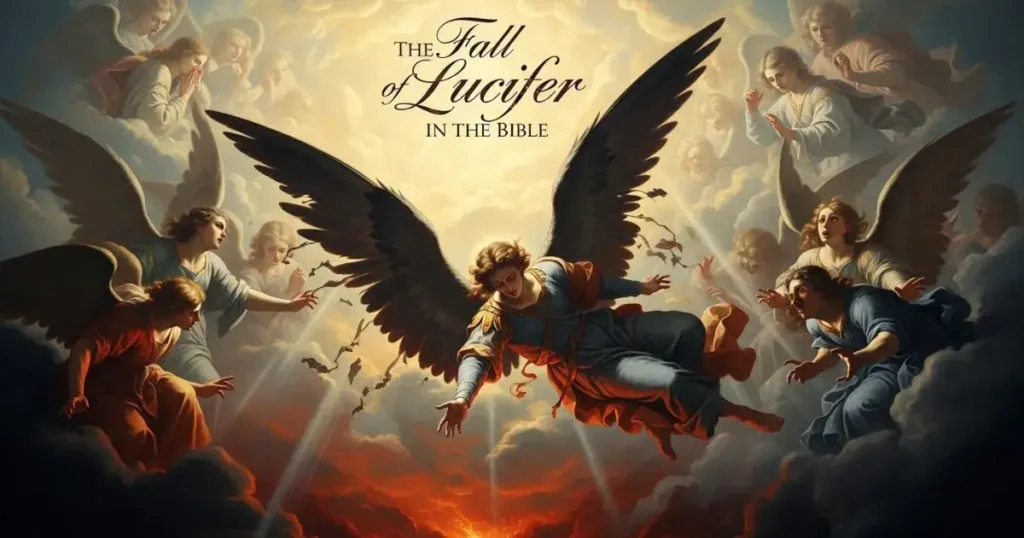
Few stories in Scripture capture the imagination like the fall of Lucifer. People search for this topic because it raises powerful questions: How could a perfect angel turn against God? Why would someone who lived in heaven choose rebellion? These questions touch on the mystery of free will the ability to choose between obedience and pride.
The Bible shows that lucifer fall was not sudden or accidental. It developed step by step, beginning with a desire for power and ending in open rebellion. By studying this progression, readers can biblically accurate lucifer depiction recognize similar patterns in everyday life. Pride often starts quietly but grows stronger when left unchecked.
Lucifer’s Five “I Will” Statements That Led to His Fall
One of the most dramatic moments in the biblically accurate archangel narrative appears in Isaiah, where Lucifer declares five bold statements beginning with the words “I will.” Each statement reflects a growing desire for authority and recognition. He wanted to ascend above the stars, sit on a throne, and become like the Most High.
These statements reveal a simple but dangerous mindset: self-exaltation. In modern life, this attitude can show up in small ways—seeking recognition, refusing correction, or believing we are above others. The story of Lucifer reminds readers that unchecked ambition can lead to spiritual downfall.
Why Did God Cast Lucifer Out of Heaven
The Bible teaches that God values righteousness and obedience. When Lucifer chose rebellion, he broke the harmony of heaven. As a result, he was removed from his position. This event was not an act of cruelty but an act of justice, preserving order in God’s creation.
Think about a workplace where an employee repeatedly ignores rules and causes conflict. Eventually, the employer must take action to protect the team. In the same way, God’s decision to cast Lucifer out of heaven protected the integrity of His kingdom. The lesson is clear: actions have consequences.
How Pride Turned a Perfect Angel Into a Fallen One
Pride is often described as the root of many sins. It begins with a simple thought: I deserve more. Over time, that thought grows into resentment, jealousy, and rebellion. Lucifer’s story illustrates this progression in a dramatic way.
Many readers relate to this theme because pride appears in everyday situations—arguments, competition, and personal ambition. The Bible uses biblically accurate lucifer fall as a warning, showing how even great strength can become weakness when humility disappears.
How Many Angels Fell With Lucifer According to Scripture
The book of Revelation suggests that a significant number of angels followed Lucifer in his rebellion. This detail highlights the influence he once had. As a leader, his decisions affected others, leading them down the same destructive path.
Lucifer’s Biblically Accurate Appearance — Before and After the Fall
Many people type phrases like lucifer biblically accurate appearance because they feel confused by what they see in movies, paintings, and online images. One picture shows a terrifying red demon with horns. Another shows a handsome angel glowing with light. So naturally, readers start asking a simple but important question: What did Lucifer really look like according to the bible
The biblically accurate lucifer truth is both fascinating and surprising. Scripture does not describe Lucifer the way modern culture does. Instead, it presents a powerful image of beauty, brilliance, and honor before the fall and then silence about many details afterward. Understanding this difference helps readers separate biblical truth from imagination and discover the deeper lesson behind the story.
Lucifer’s Beauty and Glory Described in Ezekiel
When people search the Bible for a description of Lucifer, they often find a passage in the book of Ezekiel. This passage paints a vivid picture of a being covered with precious stones and placed in a position of honor. It shows someone who was not ordinary but uniquely gifted and trusted with responsibility. That image helps explain why his fall was so dramatic.
Imagine a leader who has everything talent, influence, and respect but slowly begins to believe those gifts belong to him instead of God. That shift in thinking can change everything. The description in Ezekiel reminds readers that beauty and wisdom are blessings, yet they must always be guided by humility. Without humility, even the brightest light can fade.
What Did Lucifer Look Like Before His Fall From Heaven
Before his rebellion, Lucifer was described as radiant and full of splendor. The Bible suggests he possessed extraordinary beauty, wisdom, and authority. He was not a monster or a creature of darkness. Instead, he reflected the glory of God’s creation. This detail often surprises people because it challenges the common image of a frightening devil.
Think about the moment when a respected figure loses trust because of a serious mistake. Their reputation changes overnight, even though their abilities remain the same. In a similar way, Lucifer’s outward appearance may have once reflected greatness, but his inner pride transformed his destiny. The lesson is clear: character matters more than appearance.
Does Lucifer Have a Physical Body Today
One of the most common questions people ask is whether Lucifer has a physical body today. The Bible does not give a direct description of his current form. Instead, it speaks about spiritual beings that can influence the world in ways humans cannot easily see. This silence leaves room for mystery, which is why different traditions offer different interpretations.
Consider how wind works. You cannot see it directly, yet you can feel its effects when trees move or doors slam shut. In the same way, Scripture suggests that spiritual forces operate beyond physical sight. Understanding this helps readers focus less on appearance and more on the spiritual reality behind the story.
What the Bible Does NOT Say About Lucifer’s Appearance
Many popular images of lucifer come from art, literature, and entertainment rather than the Bible itself. Horns, wings shaped like a bat, and a red body are artistic symbols, not scriptural descriptions. Over centuries, these images became familiar, so people began to assume they were biblical facts.
Recognizing what the bible does not say is just as important as understanding what it does say. It protects readers from misunderstanding and helps them stay grounded in truth. When we separate tradition from Scripture, we gain a clearer picture of God’s message and avoid building beliefs on assumptions instead of evidence.
The Difference Between Lucifer and Archangel Michael in Scripture
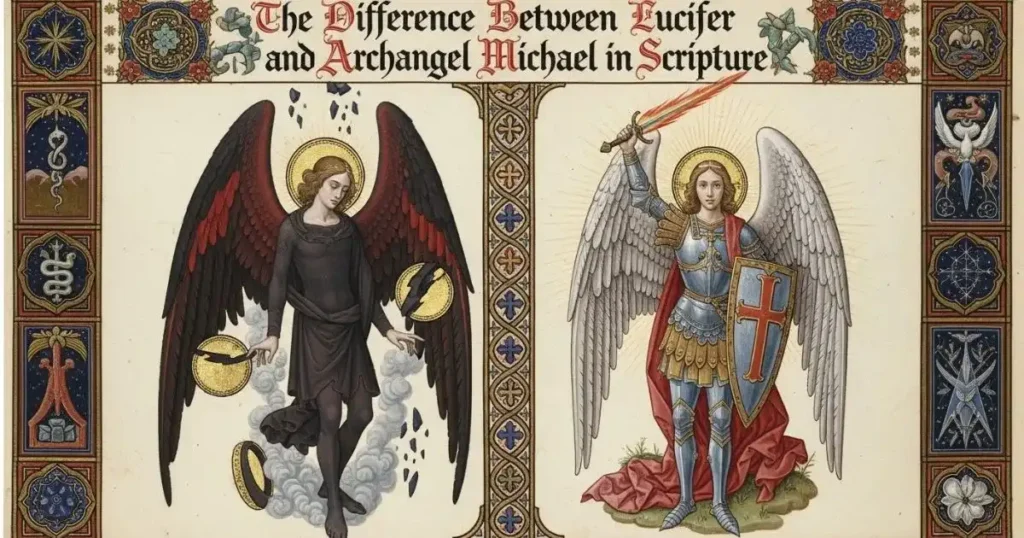
Questions about the difference between lucifer and archangel michael often come from curiosity about power, authority, and loyalty. People wonder who came first, who holds greater strength, and why one remained faithful while the other rebelled. These questions are not just about angels they reflect a deeper desire to understand leadership and responsibility.
The Bible presents michael archangel prayeras a defender and protector, someone who stands firmly on the side of righteousness. In contrast, lucifer represents the danger of pride and rebellion. By comparing these two figures, readers can see how choices shape destiny. Their stories show that strength alone does not define greatness faithfulness does.
Who Was Created First — Michael or Lucifer
The Bible does not provide a timeline that clearly states which angel was created first. Instead, it focuses on their roles and actions. This detail reminds readers that the order of creation is less important than the character displayed afterward. What truly matters is how each being used the gifts given by God.
Think about siblings in a family. One may be older, but responsibility and maturity depend on personal decisions, not age. In the same way, Scripture encourages readers to focus on obedience and faithfulness rather than speculation about chronology. The message is practical: character determines destiny.
Roles and Authority of Michael vs Lucifer in Heaven
In biblical tradition, Michael is described as a warrior and protector who leads heavenly forces against evil. His role involves defending God’s people and maintaining order. Lucifer, before his fall, appears to have held a position of influence and honor. Both roles carried authority, but they required different forms of responsibility.
Leadership always involves trust. A manager in a workplace, for example, receives authority to guide others, not to dominate them. When that authority is used wisely, it builds stability. When misused, it creates conflict. The contrast between Michael and Lucifer highlights the importance of using power for service rather than self-promotion.
Why Michael Stayed Faithful While Lucifer Rebelled
Faithfulness often grows from humility and trust. Michael’s story reflects steady obedience, even during conflict. He did not seek glory for himself but focused on fulfilling his duty. That attitude protected him from the pride that led to Lucifer’s downfall.
Many readers recognize this pattern in everyday life. A person who stays grounded and grateful is less likely to become arrogant. On the other hand, someone who constantly seeks recognition may struggle with pride. The difference between Michael and Lucifer shows that loyalty is built through consistent choices, not sudden decisions.
Who Is Stronger — Michael or Lucifer According to the Bible
The Bible describes both Michael and Lucifer as powerful beings, yet it emphasizes God’s authority above all. Strength in Scripture is not measured only by force but by alignment with God’s will. Michael’s strength comes from obedience, while Lucifer’s power weakened when he chose rebellion.
Imagine a soldier fighting with the support of a strong army behind him. His confidence comes from the unity of the team. In the same way, Michael’s strength reflects his connection to divine authority. This perspective helps readers understand that true power flows from obedience, not independence.
Biblically Accurate Angels and Demons — Understanding God’s Spiritual Creation
Many people feel curious about angels and demons because these beings appear throughout the Bible in dramatic moments. Some bring messages of hope, while others represent danger and temptation. This contrast raises an important question: How did these spiritual beings come into existence, and what roles do they play today
Understanding angels and demons helps readers see the bigger picture of spiritual life. It reminds us that the world includes both visible and invisible realities. More importantly, it shows that God remains in control, even when challenges arise. By studying these beings, believers gain confidence that good ultimately triumphs over evil.
Biblically Accurate Satan: What the Bible Really Says About the Adversary
The concept of a biblically accurate satan is often very different from popular images found in art, movies, and folklore. In scripture, biblically accurate satan appearance is described as the adversary, accuser, deceiver, and tempter who opposes God’s purposes and seeks to lead people away from the truth. Rather than focusing on a single physical appearance, the Bible emphasizes his character, actions, and influence throughout human history.
Understanding a biblically accurate satan requires examining key Bible passages that reveal his origin, role, powers, limitations, and ultimate defeat. By studying lucifer biblically accurate teaches, believers can separate biblical truth from tradition and gain a clearer understanding of spiritual warfare, temptation, and God’s victory over evil.
What Are Biblically Accurate Angels According to the Bible
Biblically accurate angels are described as messengers and servants of God. They carry out divine instructions, protect believers, and deliver guidance during critical moments. Their appearance in Scripture often inspires awe and reassurance, reminding people that God’s presence extends beyond the physical world.
Picture a trusted courier delivering an urgent message during a crisis. The message itself brings clarity and direction. In a similar way, angels represent communication between heaven and earth. Their role emphasizes God’s care and involvement in human life, offering comfort during uncertain times.
How Demons Originated From Fallen Angels
The bible suggests that demons originated from angels who followed Lucifer in rebellion. This idea highlights the consequences of choosing pride over obedience. Once they turned away from God, these beings lost their original purpose and became forces of opposition.
Think about a group of employees who leave a company after rejecting its rules. Their decision changes their relationship with the organization completely. In the same way, fallen angels became separated from God’s authority. Understanding this origin helps readers see how choices can reshape identity and direction.
The Hierarchy of Angels in Heaven
Scripture hints at different ranks among angels, including messengers, guardians, and archangels. This structure suggests an organized system designed to carry out God’s will efficiently. Each role contributes to the harmony of heaven, much like departments in a well-run organization.
Organization brings stability. In a hospital, for example, doctors, nurses, and support staff work together to save lives. Each role matters. Similarly, the hierarchy of angels reflects cooperation and purpose. Recognizing this order helps readers appreciate the balance and design within God’s creation.
What Makes an Archangel Different From Other Angels
An archangel is often understood as a leader among angels, entrusted with greater responsibility. This role involves guiding others, protecting believers, and responding to major spiritual events. The title reflects authority, yet it also demands humility and discipline.
Leadership always carries weight. A captain of a ship must remain calm during storms because the crew depends on clear direction. In the same way, an archangel represents strength combined with responsibility. This distinction reminds readers that true leadership is defined not by power alone but by faithful service.
Lucifer Biblically Accurate — What the Bible Actually Describes
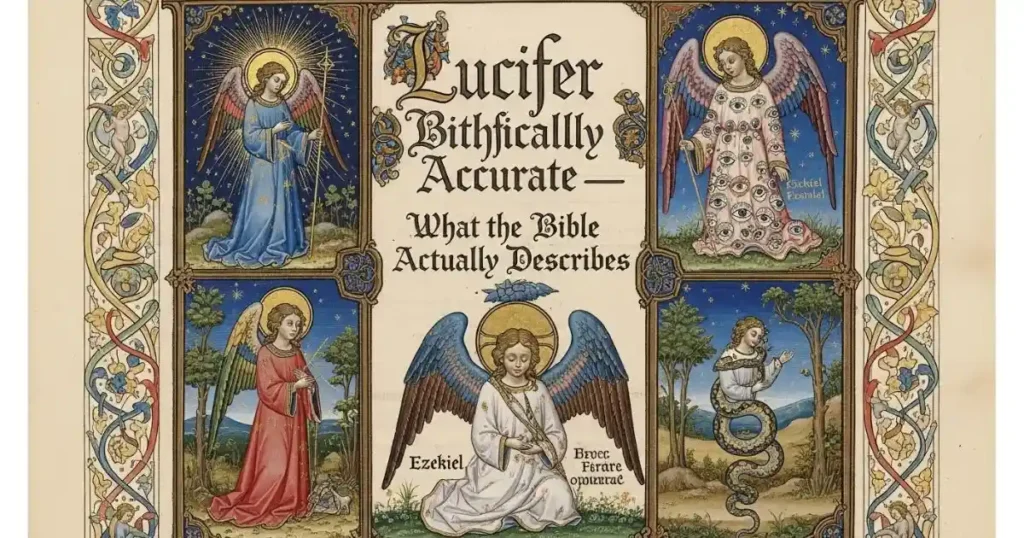
When people search for lucifer biblically accurate , they are usually trying to clear up a simple confusion: What does Scripture actually say, without movies, art, or internet theories getting in the way The biblical angel does not give a full physical portrait of Lucifer the way modern media does. Instead, it uses symbolic language—descriptions of brightness, honor, wisdom, and later, downfall due to pride.
This matters because many popular images of Lucifer come from cultural imagination rather than direct biblically accurate lucifer depiction. When you carefully read Scripture in context, you notice something important: the focus is not on “appearance like a character design,” but on identity, role, and moral condition. In other words, the Bible describes what he was spiritually before the fall, not what he “looks like” in a physical sense like modern depictions suggest.
Some passages often connected to Lucifer (like Isaiah 14 and Ezekiel 28) use poetic imagery stars, beauty, perfection, and royal language—to describe a being who held a high position but later fell because of pride. These descriptions are rich in symbolism, showing glory and elevation before collapse, rather than giving a literal body description.
So, a biblically accurate understanding is not about horns, red skin, or fantasy imagery. Instead, it points to a created being associated with light, honor, and high status, who later experienced a spiritual fall due to rebellion. The Bible’s silence on physical detail is intentional; it shifts attention away from appearance and toward the deeper lesson: pride can corrupt even the most exalted position when it replaces humility before God.
Lucifer in the Bible vs Modern Culture — Truth vs Fiction
Many people today learn about Lucifer not from Scripture but from movies, cartoons, and social media. You might scroll through YouTube or watch a TV show and see Lucifer portrayed as charming, funny, or even heroic. Over time, these images stick in our minds, and it becomes hard to separate entertainment from biblical truth. That confusion is one of the main reasons readers search this topic.
The Bible, however, tells a very different story one focused on pride, rebellion, and consequences. Understanding the contrast between culture and Scripture helps believers stay grounded in truth. It also builds spiritual awareness, reminding us that not everything popular is accurate. When we compare modern portrayals with biblical teaching, we gain clarity, confidence, and a deeper respect for God’s Word.
How Shows Like Hazbin Hotel Portray Lucifer
In recent years, animated series like Hazbin Hotel have introduced a new version of Lucifer one that feels more like a dramatic character than a biblical figure. In the show, he is often portrayed as humorous, charismatic, and emotionally complex. This creative storytelling attracts viewers because it turns a spiritual figure into someone relatable and entertaining.
However, entertainment focuses on storytelling, not theology. Writers design characters to capture attention, spark emotion, and keep audiences watching. That means the portrayal may reflect imagination rather than Scripture. Recognizing this difference helps readers enjoy entertainment while still understanding what the Bible actually teaches about spiritual reality.
Why Movies and Art Often Misrepresent Lucifer
Throughout history, artists and filmmakers have shaped how people imagine Lucifer. Paintings from the Middle Ages often showed him with horns, claws, and a frightening expression. Later films added dramatic features like fire, darkness, and monstrous shapes. These images became popular because they visually represent evil in a way people instantly recognize.
Yet the Bible rarely focuses on physical appearance. Instead, it emphasizes character and behavior pride, rebellion, and deception. Artists use symbols to communicate ideas quickly, but symbols can sometimes replace truth if people accept them without question. Understanding this helps readers approach visual portrayals with wisdom and discernment.
Common Myths About Lucifer That the Bible Corrects
Many myths about Lucifer circulate online and in everyday conversation. Some people believe he rules hell like a king. Others think he looks exactly like a red demon with horns. Another common myth is that he has equal power to God. These ideas spread easily because they sound dramatic and memorable.
The Bible corrects these misunderstandings. It teaches that God alone holds ultimate authority and that evil remains limited under His control. By comparing myths with Scripture, readers can replace confusion with clarity. This process strengthens faith and encourages a more accurate understanding of spiritual truth.
The Evolution of Lucifer’s Image Throughout History
The image of Lucifer has changed dramatically across centuries. Early Christian art sometimes depicted him as a fallen angel with a sorrowful expression. During the medieval period, artists emphasized fear and punishment, creating darker and more frightening images. In modern times, movies and television often present Lucifer as stylish, intelligent, and even sympathetic.
This evolution shows how culture influences perception. Each generation interprets spiritual themes through its own lens—art, literature, or entertainment. Recognizing this pattern helps readers stay focused on the original message of Scripture rather than shifting cultural trends. Ultimately, the Bible remains the most reliable source for understanding spiritual truth.
Bible Verses About Lucifer in the KJV and Other Translations
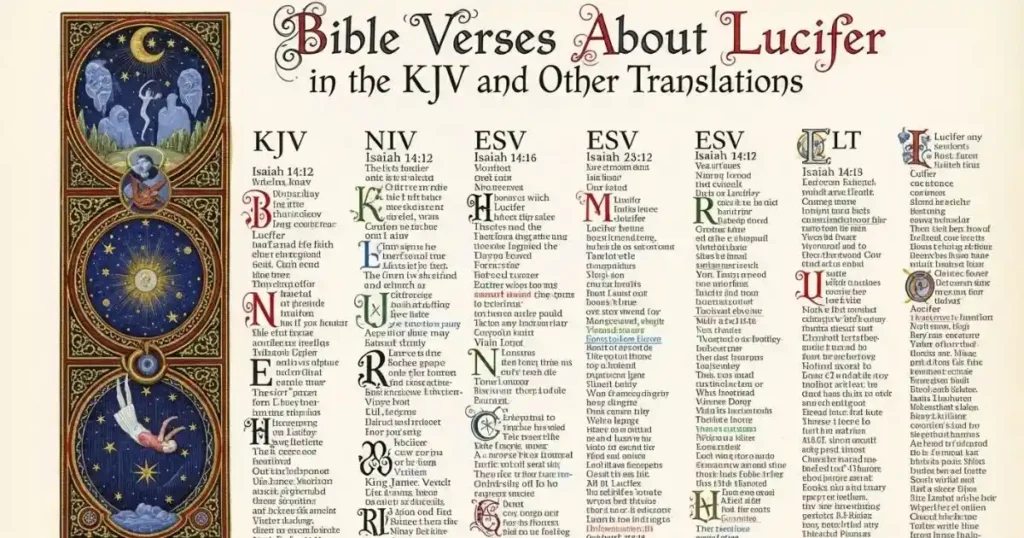
Many readers searching for biblical truth about Lucifer eventually turn to Scripture itself. But here’s where things often get confusing: different lucifer in the bible use different wording, and some passages are poetic, symbolic, or tied to ancient kings rather than direct names. That’s why people often ask, “What does the Bible actually say about Lucifer in the KJV and other versions?”
To make things clearer, the table below breaks down the key passages that are most often linked to Lucifer, what they describe, and how different translations or interpretations affect meaning. This helps separate direct Scripture, symbolic language, and later interpretation, so readers can understand the topic without confusion or cultural distortion.
Key Bible Passages About Lucifer KJV vs Meaning
| Bible Passage | What It Says (KJV / Summary) | Key Meaning | Interpretation Notes |
| Isaiah 14 — Fall of the Morning Star | “How art thou fallen from heaven, O Lucifer, son of the morning!” | Describes a proud figure brought low | Often linked to Lucifer due to “morning star” imagery, but context refers to a Babylonian king in prophecy |
| Ezekiel 28 — King of Tyre Description | Describes a being in Eden, full of wisdom and beauty | Symbolic description of pride before downfall | Used by many theologians to reflect the story of Lucifer’s pride, though originally about a human ruler |
| Revelation 12 — War in Heaven | A great dragon is cast out of heaven | Symbolic battle between good and evil | Commonly associated with Satan/Lucifer in Christian tradition, describing spiritual warfare imagery |
| Translation Differences (KJV vs Modern Versions) | KJV uses “Lucifer” in Isaiah 14 | Other translations use “morning star” or “shining one” | The Latin Vulgate introduced “Lucifer” as a name, influencing later English interpretation |
Isaiah 14 — The Fall of the Morning Star
The passage in Isaiah is one of the most discussed scriptures connected to Lucifer. It describes a powerful figure falling from heaven due to pride and ambition. The imagery of a morning star creates a striking picture of brightness losing its position and falling into darkness.
Many readers interpret this passage as symbolic rather than literal. While it uses dramatic language, it was originally directed at a historical king. However, Christian tradition later connected it with the spiritual story of pride and rebellion, shaping how people understand Lucifer today.
Ezekiel 28 — The Description of Lucifer’s Beauty
Ezekiel 28 is another key passage often associated with the story of Lucifer. It describes a being of great wisdom, beauty, and perfection placed in a high position. The imagery includes precious stones, perfection, and a garden setting that symbolizes honor and divine favor.
This passage is powerful because it highlights contrast glory before downfall. Even though it refers to a human ruler in its original context, many theological interpretations see it as reflecting the spiritual pattern of pride leading to destruction. It reinforces the lesson that outward beauty cannot protect against inner corruption.
Revelation 12 — The War in Heaven
Revelation 12 presents a dramatic vision of a cosmic battle where a great dragon is cast out of heaven. This passage is often linked to the fall of Lucifer in Christian interpretation, symbolizing the struggle between divine authority and rebellion.
Unlike Isaiah and Ezekiel, this text is highly symbolic and focuses on spiritual warfare. It represents the ongoing conflict between good and evil rather than a single historical event. Readers often see it as a picture of the broader spiritual reality behind the story of Lucifer’s rebellion.
Translation Differences That Changed Lucifer’s Interpretation
One of the most important reasons people are confused about Lucifer is translation history. In the Latin Vulgate, the word “Lucifer” was used to translate “morning star.” Later, the King James Version (KJV) adopted this wording, which made Lucifer sound like a personal name rather than a symbolic title.
Modern translations often use phrases like “morning star” or “shining one,” which shifts interpretation slightly. This shows how language can shape theology over time. Understanding these differences helps readers avoid misunderstanding and encourages a deeper, more accurate study of Scripture based on context rather than assumption.
Theological Meaning of Lucifer’s Fall — Lessons for Believers Today

The story of Lucifer is not only about ancient rebellion it is also about human behavior, choices, and spiritual awareness today. Many readers come to this topic searching for theological, but what they often find is something deeper: a reflection of how pride can quietly grow in anyone’s heart. That’s why this story continues to matter across generations.
Instead of focusing only on “what happened in heaven,” Scripture invites believers to reflect on what happens in everyday life. The fall of Lucifer becomes a warning, a mirror, and a lesson. It shows how even gifted beings can lose direction when pride replaces humility, and how spiritual downfall often begins in the heart long before it becomes visible in actions.
The Danger of Pride in Spiritual Leadership
Pride is often subtle at first. It doesn’t always look loud or obvious. It can appear as confidence, success, or even leadership ability. But when pride grows unchecked, it begins to shift a person’s focus from serving others to elevating themselves. This is the central warning reflected in the story of Lucifer’s fall.
Many leaders today—whether in churches, workplaces, or communities—face this same internal struggle. The desire to be recognized or admired can slowly replace the desire to serve. The biblical narrative of Lucifer reminds readers that leadership without humility becomes fragile, and influence without accountability can lead to spiritual collapse.
How Lucifer’s Fall Explains the Origin of Evil
One of the most difficult questions people ask is: Where does evil come from? The story of Lucifer offers a theological perspective. It does not describe evil as something created by God, but rather as something that emerged through rebellion and the misuse of free will.
In simple terms, the idea is that a created being chose independence over obedience. That choice introduced disorder into what was originally aligned with divine purpose. This helps readers understand evil not as something random, but as a consequence of separation from goodness and truth.
What Christians Can Learn From Lucifer’s Rebellion
The story of Lucifer is often read as a distant spiritual event, but its lessons are deeply practical. It teaches that gifts, intelligence, and position are not guarantees of spiritual stability. What matters most is how those gifts are used.
For believers, this becomes a reminder to regularly examine the heart. Am I becoming more grateful or more prideful? Am I using what I have to serve others or to elevate myself? These questions help keep faith grounded and prevent spiritual drift. The story becomes less about fear and more about awareness.
Why Humility Protects Against Spiritual Downfall
Humility is one of the strongest protections in spiritual life. It keeps a person teachable, grounded, and aware of their dependence on God. In contrast, pride creates a sense of self-sufficiency that can slowly disconnect a person from spiritual truth.
Think of humility like a foundation under a building. You may not see it, but it holds everything together. Without it, even the strongest structure becomes unstable over time. In the same way, humility stabilizes character, relationships, and spiritual growth. The fall of Lucifer highlights what happens when that foundation is ignored.
Biblically Accurate Angels, Archangel Michael, and Spiritual Beings in Scripture
Many readers searching for biblically accurate angels or even figures like Satan and Jesus are trying to understand one deeper question: What does the Bible actually say about spiritual beings compared to modern imagination? Over time, movies, art, and cultural stories have reshaped these beings into dramatic visual characters. But Scripture often describes them in symbolic, spiritual, and purpose-driven ways rather than physical detail.
Understanding this difference is important because it helps separate biblical truth from cultural interpretation. When we look at angels, Satan, and even Jesus through Scripture, we see a focus on roles, authority, and divine purpose—not fantasy imagery. This section brings clarity by aligning popular search intent with what the Bible actually communicates.
Biblically Accurate Angel — What the Bible Actually Describes
People often search for “biblically accurate angel” expecting wings, glowing faces, or human-like forms. However, the Bible’s descriptions are often symbolic and sometimes overwhelming in imagery, emphasizing holiness, power, and divine presence rather than physical appearance.
Angels in Scripture are primarily messengers and servants of God. Their role is more important than their visual form. This teaches readers that spiritual beings are not meant to be understood like physical creatures, but through their function in God’s plan.
Biblically Accurate Satan — What Scripture Actually Shows
The Bible presents Satan not as a cartoon-like figure, but as a spiritual being associated with temptation, accusation, and opposition to God’s will. His role is described through actions rather than appearance, focusing on influence rather than physical form.
This is why many modern depictions can be misleading. The biblical text emphasizes behavior deception, pride, and rebellion rather than a detailed physical description. This helps readers understand Satan as a spiritual adversary, not a mythological character.
Biblically Accurate Jesus — Understanding His Biblical Identity
When people search for “biblical accurate Jesus,” they are often surprised to learn that Scripture does not focus on physical appearance at all. Instead, the Bible emphasizes His mission, teachings, compassion, and sacrifice.
The focus of Jesus in Scripture is spiritual and redemptive rather than visual. He is described through His actions—healing, teaching, and ultimately offering salvation. This shows that His identity is rooted in purpose, not appearance.
Biblically Accurate Archangels — Their Role
Biblically accurate archangels are described as high-ranking spiritual beings with specific responsibilities. Among them, Archangel Michael is often associated with protection, leadership in spiritual conflict, and defense of God’s people.
Archangels are not independent rulers but serve under divine authority. Their role highlights order in the spiritual realm, where each being has a purpose aligned with God’s plan. This structure reinforces the idea that authority in heaven is based on obedience, not power alone.
Why Biblically Accurate Angels Differ From Pop Culture
Modern media often turns angels into glowing humans with wings and soft features. While visually appealing, these portrayals simplify a much deeper spiritual reality. The Bible uses symbolic language to express ideas that go beyond human imagination.
Understanding this difference helps readers avoid confusion and focus on the real message: angels, demons, and spiritual beings exist to fulfill divine purpose—not to match artistic expectations. This clarity strengthens biblical literacy and prevents misinterpretation.
FAQ’s
Was Lucifer the Most Beautiful Angel in Heaven?
The Bible describes Lucifer as having great beauty, wisdom, and high status before his fall, especially in symbolic passages like Ezekiel 28. Because of this imagery, many people assume he was the “most beautiful” angel. However, Scripture does not clearly rank angels by beauty. Instead, it highlights that his splendor and elevated position were part of his original honor before pride led to his downfall.
The key takeaway is not comparison but warning—beauty and greatness without humility can lead to spiritual failure. The focus of the biblical narrative is always character, not appearance.
What Was Lucifer’s Name Before He Fell?
The Bible does not explicitly state a personal “before-fall name” for Lucifer. The term “Lucifer” comes from a Latin translation meaning “light-bearer” or “morning star,” used in Isaiah 14. In Hebrew, the word used is Helel, which refers to brightness or shining.
This shows that “Lucifer” is more of a descriptive title than a confirmed personal name in the original text. Over time, translations and tradition shaped how the name is understood today.
Is Lucifer Mentioned Many Times in the Bible?
The exact word “Lucifer” appears only once in the King James Version (Isaiah 14:12). In other Bible translations, even that reference is often rendered as “morning star” or “shining one.” Because of this, most biblical discussions about Lucifer are based on interpretation rather than repeated direct mentions.
However, related themes—pride, rebellion, and spiritual downfall—appear throughout Scripture in different passages. That is why the concept of Lucifer is often discussed more broadly than the name itself.
Who Was Created First — Archangel Michael or Lucifer?
The Bible does not clearly state whether Michael or Lucifer was created first. Scripture does not focus on the timeline of angelic creation but instead emphasizes their roles and actions.
What is more important in the biblical narrative is not who came first, but who remained faithful. Michael is consistently shown as obedient and aligned with God’s will, while Lucifer is associated with rebellion. The contrast highlights character rather than chronology.
Are Demons Fallen Angels?
Many biblical interpretations suggest that demons are associated with fallen spiritual beings who followed Lucifer in rebellion. This idea is based on passages that describe spiritual conflict and beings cast out of heaven.
While the Bible does not give a detailed “origin story” for demons, it consistently presents them as forces opposed to God’s will. The key concept is separation from divine order, which results in corruption of purpose and influence.
What Does “Morning Star” Mean in the Bible?
The phrase “morning star” is a symbolic expression used in Scripture to describe brightness, prominence, or rising light. In Isaiah 14, it is connected to a figure who falls from a high position, which later became associated with Lucifer in interpretation.
However, the same phrase is also used positively elsewhere in the Bible, showing that context matters. It can represent honor, brightness, or even spiritual symbolism depending on usage. This is why careful reading is important to avoid misunderstanding.
Conclusion — The Real Truth About Biblically Accurate Lucifer and Why It Matters Today
At the end of this journey, one thing becomes clear: the idea of biblically accurate Lucifer is often shaped more by culture than by Scripture itself. Movies, art, and online interpretations have added layers of imagery, personality, and symbolism that are not always directly found in the Bible. When we return to the text itself, the focus shifts away from appearance and fantasy and back to something deeper: identity, pride, and spiritual consequence.
The Bible presents Lucifer not as a character to be admired or feared for his looks, but as a powerful warning about what happens when created beings turn away from humility. His story reflects a timeless truth: even greatness can fall when pride replaces obedience. This is not just an ancient narrative—it is a reflection of human experience today, where ambition, ego, and self-exaltation can still lead people away from spiritual balance.
Understanding Lucifer’s story also helps believers strengthen their own faith. It reminds us that spiritual stability is not built on power, intelligence, or position, but on humility and dependence on God. When readers step back and see the full picture, the message becomes less about fear and more about wisdom: stay grounded, stay humble, and stay aligned with truth.
In the end, the lesson of Lucifer is not just about a fall from heaven it is about the ongoing choice every person faces between pride and humility, independence and obedience, self-glory and divine guidance. That is why this topic continues to matter today, and why searching for truth behind biblically accurate Lucifer leads not just to knowledge, but to reflection.

Usman Ahmad is the founder and content creator at BibleDailyPrayers, a faith-based platform dedicated to sharing daily Bible prayers, scriptures, and spiritual encouragement. He is passionate about helping believers strengthen their prayer life and grow closer to God through clear, Scripture-centered content. Usman focuses on creating original, user-friendly, and spiritually uplifting resources that inspire faith, hope, and consistent devotion.